10 Trends Reshaping Visual Communication in 2026 and Beyond
The LED display technology industry crossed a threshold in 2026. With the global market valued at $20.73 billion and growing at 5.41% CAGR, the conversation has shifted from incremental improvements to fundamental reinvention. At ISLE 2026 in Shenzhen — the industry’s largest global exhibition — over 1,000 exhibitors and 230,000 visitors witnessed technologies that would have seemed like science fiction just five years ago: Micro COB displays with contrast ratios exceeding 100,000:1, AI-powered content systems that generate real-time visuals, and transparent LED screens that turn glass facades into floating holograms. For anyone investing in display technology today, understanding these trends isn’t optional — it’s survival.
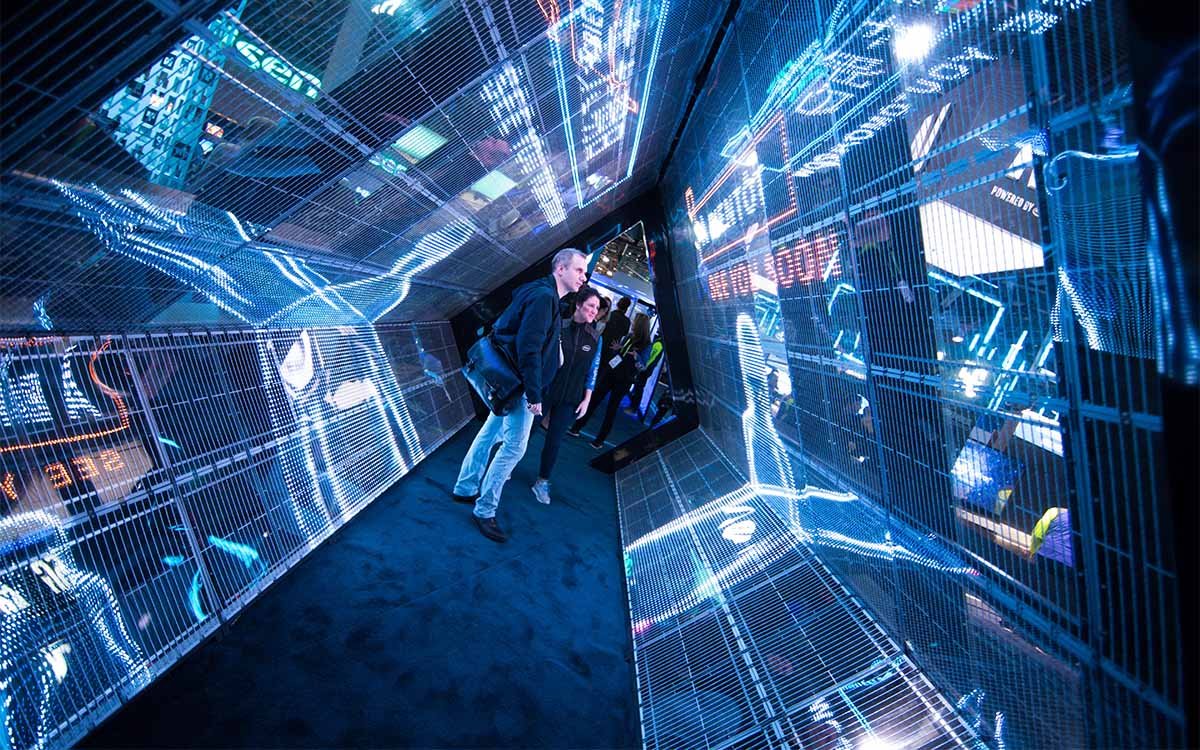
Figure 1: ISLE 2026 exhibition in Shenzhen — the global stage for next-generation LED display technology
Where the Industry Stands: The 2026 Landscape
Before projecting forward, it’s worth grounding in where we are. The LED display technology in 2026 is characterized by three forces that weren’t equally present even two years ago: the commoditization of fine pitch, the integration of artificial intelligence at every layer of the stack, and the emergence of sustainability as a genuine purchasing criterion rather than marketing gloss.
Fine-pitch LED Display Technology (P1.2 and below) has moved from premium niche to standard expectation. Control rooms, broadcast studios, and corporate boardrooms that once accepted P2.5 now specify P0.9 without hesitation. The price compression has been brutal — Micro COB manufacturing costs have fallen 35–45% since 2024 — but the volume expansion has been explosive. ISLE 2026 data suggests Micro COB now captures 57% of the narrow pixel pitch market, up from 8% in 2024.
Meanwhile, AI has penetrated every critical link of the industrial chain. On the front end, large language models generate dynamic content, personalize messaging, and enable gesture-based interaction. On the back end, AI optimizes power consumption, predicts component failures before they occur, and automates color calibration across multi-panel installations. The distinction between “display hardware” and “display intelligence” is dissolving.
The global LED display technology and market reached $20.73 billion in 2026 with a 5.41% CAGR. Products with pixel pitch ≤P1.1 are growing at 28% CAGR — the fastest segment in the industry. The Mini LED display market alone is projected to reach $30.95 billion by 2031. These aren’t projections from analyst reports; they’re the numbers driving procurement decisions at major venues and corporations right now.
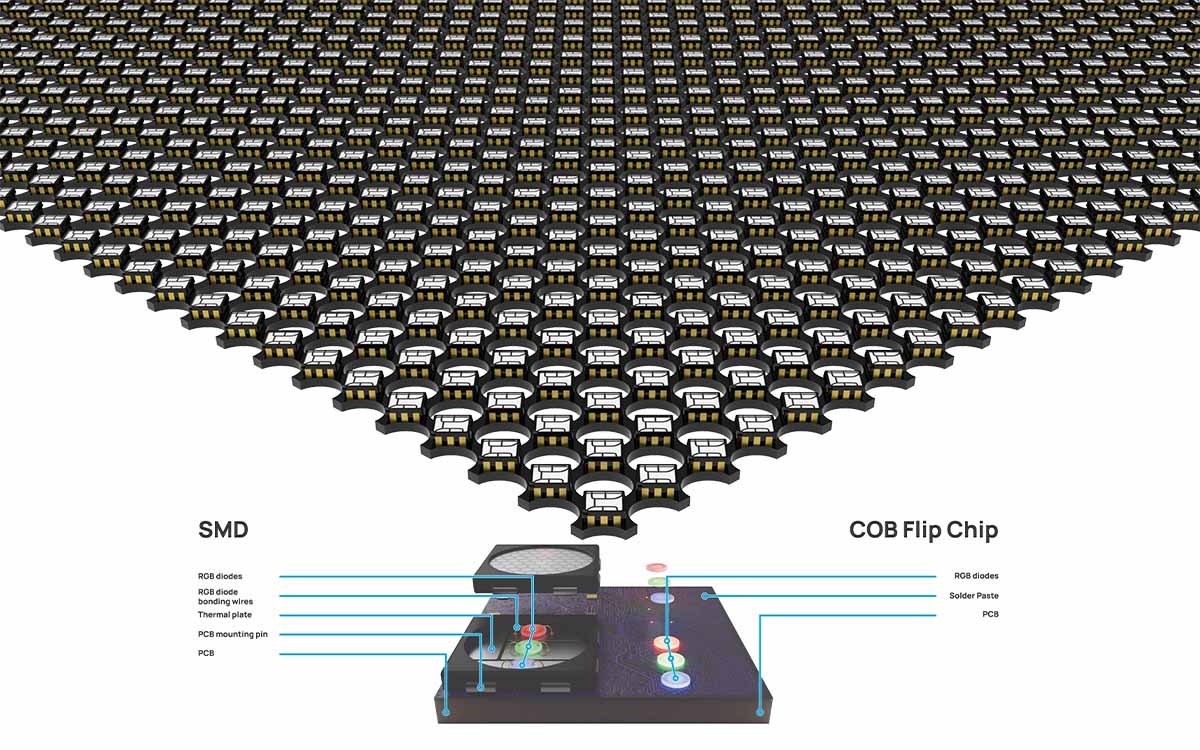
Figure 2: Micro COB vs. traditional SMD — contrast ratio exceeds 100,000:1 with true black levels
1. Micro COB and MIP: The New LED Display Technology Standard
COB (Chip-on-Board) and MIP (Micro LED in Package) have emerged as the two dominant technical routes at ISLE 2026, displacing traditional SMD as the default choice for professional installations. The reasons are technical and economic.
Micro COB deposits LED chips directly onto the PCB substrate, eliminating the individual LED package. This removes the physical gap between pixels, enabling true black levels and contrast ratios above 100,000:1. The surface is flat, protected, and seamless — critical for virtual production and broadcast applications where camera sensors reveal every imperfection. Power consumption drops 30–40% compared to equivalent Mini LED configurations, and the lifespan extends to 100,000 hours with virtually zero burn-in risk.
MIP takes a different approach: packaging microscopic LEDs (sub-50 micrometers) into transfer-friendly units that can be handled by conventional SMD pick-and-place equipment. This bridges the manufacturing gap — MIP achieves Micro LED image quality without requiring the billion-dollar mass transfer lines that pure Micro COB demands. For manufacturers, MIP is the pragmatic path to Micro LED economics. For buyers, it means P0.6–P0.9 pixel pitches at prices that were impossible 24 months ago.
At GOB LED Display, our GOB encapsulation technology extends the COB advantage further by adding a transparent protective resin layer. The result is a display that combines Micro COB’s image quality with impact resistance, moisture protection, and front-access serviceability — the durability profile that mission-critical applications demand.
2. AI-Powered Display Intelligence
The integration of artificial intelligence into LED display technology systems is no longer experimental — it’s the defining feature of 2026 product lines. And it’s happening at multiple levels simultaneously.
Content Intelligence: AI models now generate, adapt, and optimize display content in real time. A retail LED screen can analyze foot traffic patterns, demographic data, and weather conditions to automatically switch between promotional content. A stadium perimeter display can detect which camera is live and adjust sponsor content to maximize broadcast visibility. These aren’t pre-programmed rules; they’re machine learning models trained on millions of hours of display analytics.
Operational Intelligence: On the backend, AI monitors every LED module’s temperature, voltage, and color output. Predictive maintenance algorithms identify modules that will fail within 72 hours and flag them for replacement before they impact image quality. Automatic calibration systems adjust color temperature across the entire display surface every 30 minutes, compensating for ambient light changes and LED aging. The result is a display that maintains factory-fresh image quality for years without manual intervention.
Interaction Intelligence: Gesture recognition, voice control, and gaze tracking are now standard features on mid-to-high-end LED displays. A presenter in a corporate boardroom can switch between content sources with a hand wave. A museum visitor can navigate an interactive LED wall by pointing. These features aren’t gimmicks — they’re driven by the same computer vision models that power autonomous vehicles, adapted for display interaction.
3. Transparent and Holographic LED Displays
The transparent LED display market has matured from novelty to architectural necessity. Modern transparent LED screens achieve 90% light transmittance — when turned off, they’re virtually invisible. When active, content appears to float in mid-air, with physical objects visible behind the display surface.
This isn’t projection. Holographic LED displays use ultra-thin LED filaments arranged in a grid pattern without traditional cabinet frames. The display mounts directly onto glass or suspends from ceilings, creating a frameless visual layer that integrates with architecture rather than competing against it. Luxury retail brands use holographic LED in storefront windows to display floating product animations while maintaining visibility into the store interior. Automotive showrooms mount holographic screens on glass walls to overlay vehicle specifications onto physical cars.
The next evolution is volumetric display — LED arrays that create true three-dimensional images without glasses. Early prototypes at ISLE 2026 demonstrated 180-degree viewing angles on holographic content, with depth perception that conventional 2D screens cannot replicate. The technology is still 3–5 years from commercial viability at scale, but the trajectory is clear: the boundary between physical space and displayed content is dissolving.
4. 8K, HDR, and the Resolution Race
While 4K remains the dominant resolution for most LED installations, 8K has become the standard specification for all new high-end projects in 2026. The driver isn’t consumer demand — there is virtually no native 8K broadcast content. The driver is pixel density: at P0.7 pitch, a 163-inch display natively resolves 8K without upscaling. When the hardware supports it, specifying 8K becomes a formality rather than a premium.
HDR (High Dynamic Range) support is now standard on mid-to-high-end displays, with peak brightness levels reaching 10,000 nits and contrast ratios of 100,000:1. Modern LED displays can reproduce the full Rec. 2020 color gamut, exceeding cinema standards. For virtual production and broadcast applications, this means LED volumes that match or exceed the dynamic range of the cameras filming them — eliminating the color grading compromises that have plagued VP workflows since the technology’s inception.
The practical implication: if you’re specifying a display for professional content creation in 2026, 8K HDR isn’t a luxury. It’s the baseline that prevents your investment from becoming obsolete within the product lifecycle.
5. Sustainability as Engineering Mandate
Environmental considerations have moved from marketing slide to engineering specification. Three technical approaches dominate the 2026 sustainability landscape:
Common Cathode Technology: Traditional LED displays power red, green, and blue channels with separate currents, wasting energy as heat. Common cathode designs use a unified power architecture that reduces consumption by up to 30% while maintaining identical brightness output. For a 500-square-meter stadium display operating 200 days per year, that’s a six-figure annual energy cost reduction.
Air-Conditioning-Free Heat Dissipation: Advanced thermal management using graphene composites and vapor chamber cooling eliminates the need for active air conditioning in outdoor installations. This removes both the capital cost of HVAC infrastructure and the ongoing energy consumption of climate control.
Recyclable Materials and Circular Design: Manufacturers are shifting to aluminum alloys with 70%+ recycled content, modular designs that enable component-level repair rather than full replacement, and take-back programs that ensure proper end-of-life recycling. The carbon footprint reduction is measurable: eco-friendly LED designs can cut lifecycle emissions by 30% compared to conventional configurations.
For procurement teams, sustainability is no longer a checkbox. Corporate ESG mandates, government building codes, and EU environmental regulations are making low-carbon display specifications a contractual requirement. The manufacturers who invested in green engineering early are now winning the tenders that matter.
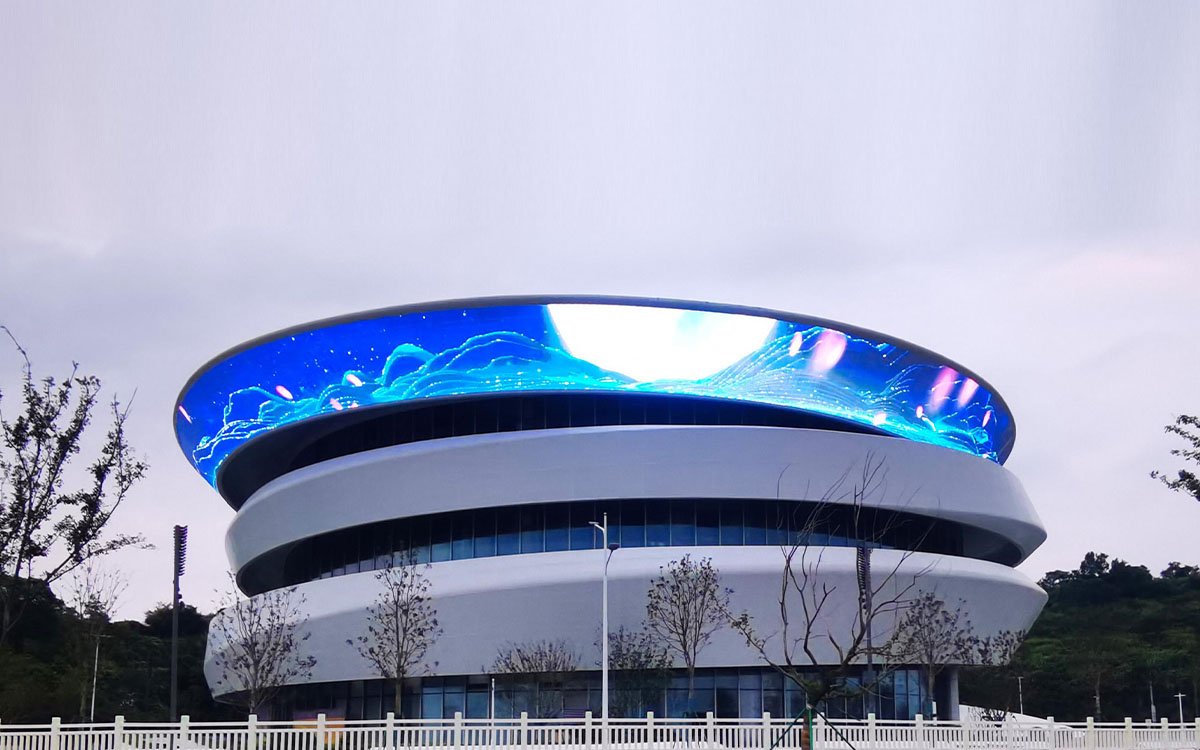
Figure 3: Transparent LED display on glass facade — architecture and content merge into one
6. Flexible, Curved, and Form-Factor Freedom
The rectangular flat screen is no longer the default assumption. Flexible LED modules — built on polyimide substrates rather than rigid fiberglass — can bend to radii as tight as 120mm. This enables cylindrical columns wrapped in LED, curved concave surfaces that immerse viewers, and even foldable temporary installations that pack into flight cases.
At GOB LED Display, our curved LED volume systems use precision-machined cabinet joints that maintain pixel alignment across concave and convex geometries. For virtual production, this means LED volumes that wrap 270 degrees around the camera, creating seamless background environments without green screen compositing. For retail, it means storefronts with LED surfaces that follow the architectural curves of the building rather than fighting them.
The rental and events market has been particularly transformed. Lightweight die-cast aluminum cabinets (under 7kg per 500×500mm panel) with fast-lock systems reduce installation time by 30–40% compared to legacy steel frames. Tool-free front maintenance, integrated power distribution, and modular flight case packaging have turned LED deployment from a construction project into a logistics operation.
7. Immersive LED Environments and XR Integration
Immersive LED environments — 360-degree LED walls combined with LED floors and ceilings — are the fastest-growing segment in 2026. These installations don’t display content; they become the environment. A visitor stepping into an immersive LED room is surrounded by visuals that respond to their movement, creating presence rather than mere viewing.
The technology stack has matured significantly. Camera tracking systems (using infrared or LiDAR) map visitor position in real time, triggering content changes as they move. Multi-user interaction allows groups to collaboratively manipulate LED content through gesture or touch. Augmented reality overlays — visible through smartphone cameras or AR glasses — add digital layers to the physical LED environment.
For brands, immersive LED delivers engagement metrics that static displays cannot match. Studies show audience engagement increases by 50% or more in immersive environments compared to conventional screen viewing. For museums, theme parks, and experiential retail, this translates directly to dwell time, social media sharing, and revenue per visitor.
The virtual production LED volume is the professional counterpart to consumer immersive environments. Film studios use LED walls as real-time backgrounds, capturing in-camera visual effects that eliminate post-production compositing. The same technology that powers Hollywood productions is now accessible to corporate content creators, event producers, and educational institutions.
8. Automotive LED Displays: The New Frontier
The automotive industry has emerged as one of the fastest-growing LED display segments in 2026. Electric vehicle platforms, with their flat floor pans and expansive interior surfaces, demand displays that traditional automotive suppliers cannot provide.
Curved dashboard displays spanning the entire cockpit width are now standard on premium EVs. Transparent head-up displays (HUDs) project navigation, speed, and safety information across the entire windshield — not just a small corner — using LED micro-projectors. Exterior LED panels on vehicle grilles and rear windows enable vehicle-to-pedestrian communication (displaying “yielding to crosswalk” or “autonomous mode active” messages).
The technical requirements are extreme: automotive LED displays must survive temperature cycles from -40°C to +85°C, vibration levels that would destroy consumer electronics, and electromagnetic interference standards that exceed military specifications. The manufacturers who can meet these requirements command premium margins — and the volume is substantial. Automotive LED display shipments are expected to double in 2026 compared to 2024.
9. Smart City Integration and IoT Convergence
LED displays are becoming infrastructure nodes in smart city networks, not standalone advertising surfaces. Smart LED light pole displays combine street lighting, digital signage, environmental sensors, traffic monitoring, and emergency alert systems into unified urban communication platforms.
A smart pole on a city street corner can: display real-time air quality data and public transit schedules; monitor traffic flow and pedestrian density; broadcast emergency alerts during natural disasters or security incidents; and provide Wi-Fi hotspots and EV charging points. The LED display is the visible interface, but the value is in the data layer beneath it.
This convergence creates new business models. Municipalities no longer purchase LED displays as capital equipment; they procure them as service contracts where the vendor retains ownership and monetizes advertising revenue. The city gets free infrastructure, the vendor gets recurring revenue, and citizens get real-time information services. It’s a structural shift that changes who buys LED displays and how they’re financed.
10. From Products to Solutions: The Ecosystem Shift
Perhaps the most significant trend at ISLE 2026 wasn’t a technology at all — it was a business model. The LED display industry is transitioning from hardware sales to complete solution provision. Customers don’t want panels; they want outcomes.
This means manufacturers are now responsible for: customized system design that integrates LED with audio, control, and networking infrastructure; content strategy and management platform development; installation engineering including structural assessment and power infrastructure; and ongoing technical support, maintenance, and upgrade paths. The manufacturers winning the largest projects are those acting as partners rather than component vendors.
For buyers, this shift reduces risk. A single vendor accountable for the entire system eliminates the blame-shifting that plagues multi-vendor installations. For manufacturers, it increases margins and customer lifetime value. The industry is maturing from a commodity components business to a professional services business — and the companies that don’t adapt will be consolidated or displaced.
The Road Ahead: 2026–2030 Timeline
- 2026 – Now
Micro COB and MIP become mainstream for P0.6–P1.0 applications. AI integration standard on mid-to-high-end displays. Sustainability mandates begin affecting procurement decisions in EU and North American markets.
- 2027 – 2028
Transparent LED achieves 95%+ light transmittance at commercial scale. Volumetric holographic displays enter limited commercial deployment (retail flagship stores, museums). Automotive LED becomes the second-largest segment after commercial displays.
- 2029 – 2030
Self-emitting Micro LED replaces Mini LED in premium applications. AI-generated content becomes the primary display input method, with human-created content reserved for high-value brand moments. LED displays achieve carbon-neutral manufacturing certification as standard.
What These Trends Mean for Your Next LED Investment
If you’re evaluating LED display technology in 2026, the landscape has changed in ways that make conventional procurement checklists obsolete. Here’s what matters now:
Don’t buy pixel pitch you don’t need. P0.7 is remarkable, but if your viewers sit 10 meters away, P1.5 delivers identical perceived quality at half the cost. Match pixel density to viewing distance, not to specification envy.
Demand AI readiness, not just AI features. A display with “AI” in the marketing brochure but no API access, no data export, and no upgrade path is a dead end. Specify open architecture, cloud connectivity, and firmware update commitment.
Treat sustainability as a financial metric. Calculate total cost of ownership including energy consumption, maintenance, and end-of-life disposal. A 20% premium upfront for common cathode technology pays back in 18 months through energy savings alone.
Think in ecosystems, not components. The display is one node in a network that includes content management, control systems, audio, and networking. Choose vendors who understand the full stack, not just the panel.
GOB LED Display engineers next-generation LED systems with Micro COB technology, AI integration, and sustainable design. From virtual production volumes to smart city installations, we build the displays that define what’s next.
Talk to Our Engineers →FAQ: Future LED Display Technology
Conclusion: The Display Is Disappearing
The most profound trend in LED display technology isn’t any single specification improvement. It’s the gradual disappearance of the display as a distinct object. Screens are becoming surfaces, surfaces are becoming intelligent, and intelligence is becoming ambient.
A transparent LED facade on a building doesn’t look like a display — it looks like architecture that happens to show content. An AI-powered retail screen doesn’t feel like technology — it feels like a conversation with a knowledgeable salesperson. An immersive LED environment doesn’t present information — it creates presence.
This invisibility is the ultimate measure of display technology maturity. The first television sets were furniture — bulky cabinets that dominated living rooms. Today’s LED displays are infrastructure — integrated, intelligent, and invisible until needed. The trajectory is clear: the display itself matters less than the experience it enables.
At GOB LED Display, we engineer for this future. Our GOB-encapsulated Micro COB displays deliver the image quality that next-generation content demands. Our all-in-one integrated systems reduce deployment complexity to match the simplicity that AI-era users expect. Our stadium and venue displays transform physical spaces into revenue-generating visual platforms. We don’t just build screens — we build the infrastructure of visual communication.
The next decade belongs to the organizations that understand this shift. The question isn’t what display technology to buy. The question is what visual experiences you want to create — and whether your technology partner can build them.
From Micro COB fine-pitch to AI-powered smart displays, GOB LED Display engineers the technologies that define what’s next. Request a consultation with our future technology team.
Schedule a Technology Briefing →