Professional Stadium LED Displays Manufacturer
Walk into any modern sports arena today and the difference is immediate. Our stadium LED displays are not just show the score anymore — it commands the entire visual experience. From the center-hung scoreboard that dominates the arena ceiling to the perimeter screens wrapping the pitch like a digital ribbon, LED technology has redefined what spectators expect when they buy a ticket. For venue operators, the question is no longer whether to invest in LED, but which configuration delivers the best return on a substantial capital outlay.
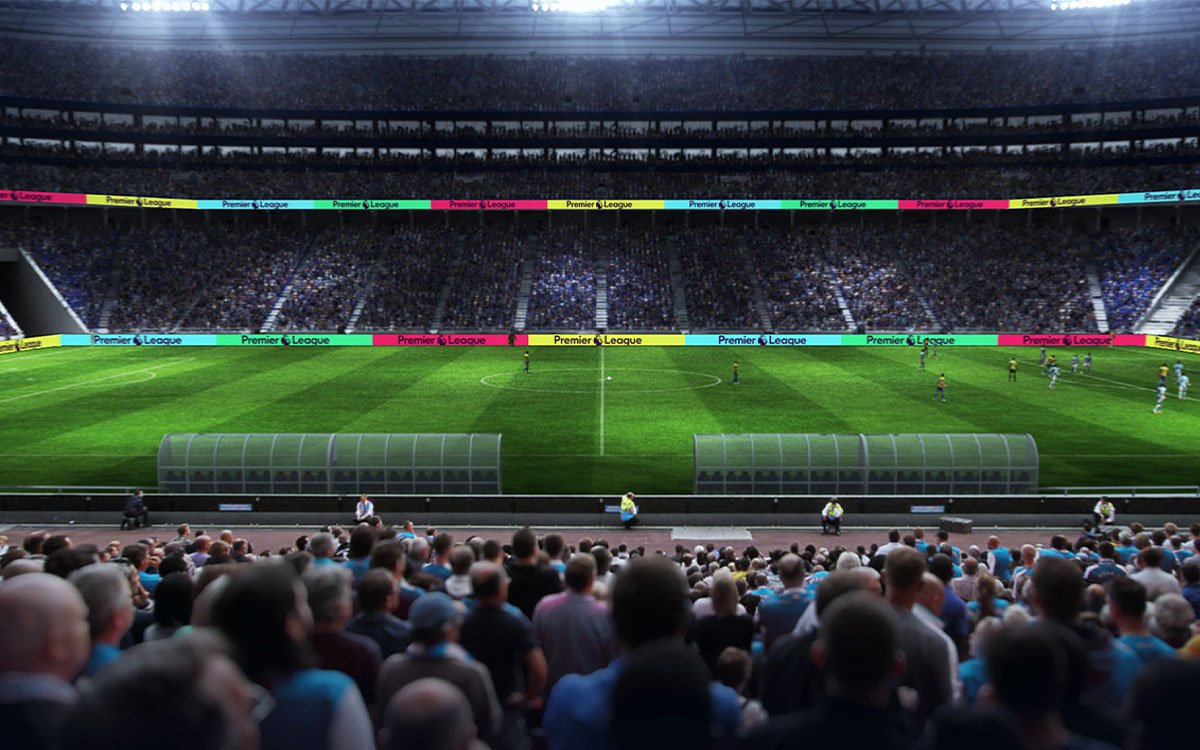
Figure 1: Professional stadium LED displays configuration — perimeter digital advertising boards
What Is a Stadium LED Display?
A stadium LED display is a large-format LED screen system purpose-built for sports venues, designed to operate under extreme conditions that would destroy conventional displays. These aren’t repurposed commercial screens — they’re engineered from the ground up to handle direct sunlight, driving rain, freezing temperatures, and the physical abuse of professional sports. The category covers several distinct form factors, each serving a different function within the venue.
The center-hung LED scoreboard remains the most recognizable type — the massive four-sided or eight-sided display suspended above center court or midfield. Below it, perimeter LED displays line the edges of football pitches and basketball courts, replacing static advertising boards with dynamic, rotating sponsor content. Ribbon LED screens wrap around the upper tiers of seating, displaying live scores, statistics, and crowd prompts. And increasingly, outdoor LED displays on stadium exteriors serve as landmarks visible from miles away, turning the venue itself into a billboard.
Venues that replace static perimeter advertising with stadium LED displays typically see sponsorship revenue increases of 200% to 300%. A single LED perimeter board can rotate between ten or twelve sponsors per match, where a static board carries one. That math changes the economics of stadium operations entirely — and explains why even lower-tier clubs are finding ways to finance LED installations.
Stadium LED Displays Technical Specifications
Not all LED screens are equal, and the gap between entry-level and professional-grade stadium displays is substantial. Understanding the specification hierarchy helps venue operators make informed procurement decisions.
Pixel pitch selection depends on viewing distance. For perimeter boards where spectators sit 15–30 meters away, P6 to P8 delivers the optimal balance of clarity and cost. Center-hung scoreboards viewed from 50+ meters can use P10 without perceptible quality loss. The key is matching pixel density to the economics of the installation — overspending on fine pitch for long viewing distances wastes budget that could fund additional screen area.
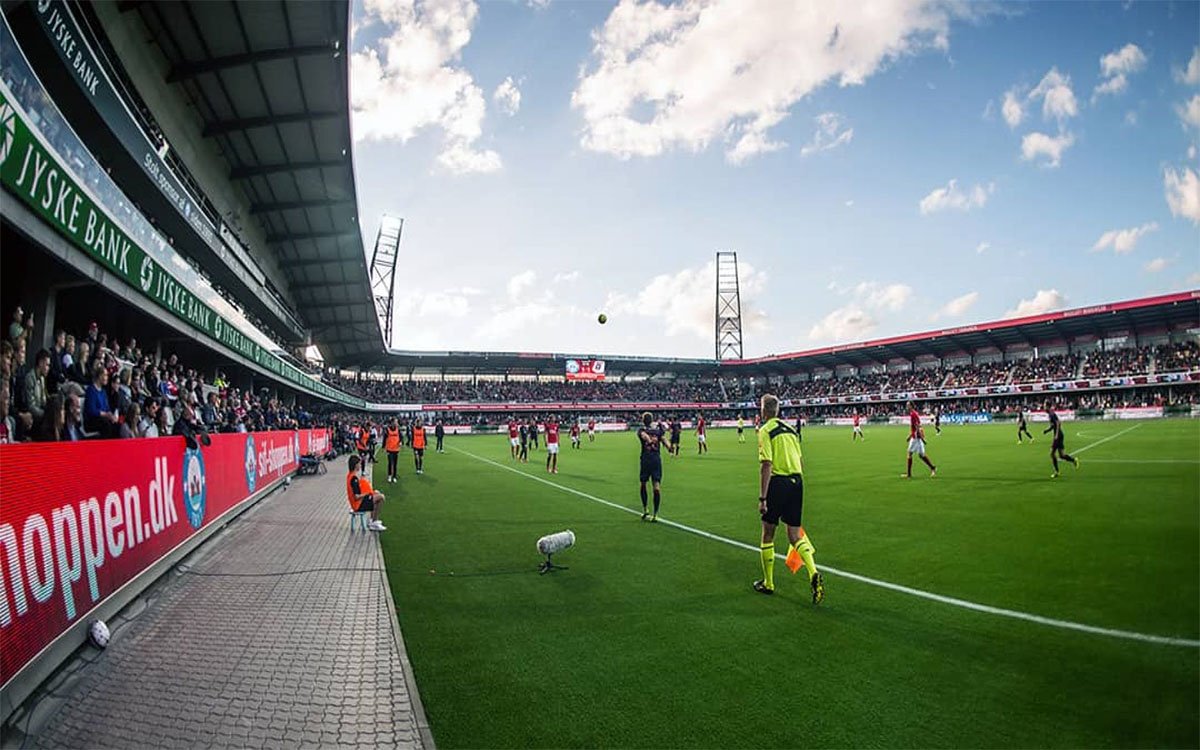
Figure 2: Stadium LED displays applications — perimeter, ribbon, and exterior configurations
Types of Stadium LED Displays and Their Applications
The visual anchor of every arena. Four-sided or eight-sided configurations suspended above center field, displaying scores, replays, player stats, and sponsor content to every seat. Modern versions include lift mechanisms for vertical adjustment during concerts and ceremonies.
The workhorse of stadium revenue. Installed along pitch edges with soft rubber masks and anti-collision foam to absorb player impacts. Rotates sponsor ads every 30 seconds, generating multiples of static board revenue while protecting athletes from injury.
Continuous LED strips wrapping upper concourse levels. Display live scores, fantasy stats, crowd prompts, and concession promotions. The ribbon format ensures every spectator — even those in the worst seats — stays connected to the action.
Facade-mounted LED displays visible from highways and city centers. Turn the stadium exterior into a landmark advertising asset. Used for match promotions, ticket sales, and city-wide event announcements — generating revenue even when the venue is empty.
Player tunnel displays and concourse entry screens build anticipation before spectators reach their seats. Show team lineups, historical match data, and sponsor messages during the walk-in — turning transit time into engagement time.
Premium seating areas demand premium visuals. High-resolution P3–P4 displays in corporate boxes and VIP lounges deliver broadcast-quality replays and personalized content — justifying the price differential between standard and hospitality tickets.
Stadium LED Displays vs Stadium Billboards: The Advertising Economics
| Revenue Factor | Static Advertising Boards | Stadium LED Display |
|---|---|---|
| Ad Slots Per Match | 1 fixed sponsor | 8–12 rotating sponsors |
| Content Flexibility | Fixed print, changed manually | Real-time video, animations, live data |
| Installation Time | Days of manual labor | Modular, hours with quick-lock |
| Weather Resistance | Fades, peels, requires replacement | IP65 rated, 80,000+ hour lifespan |
| Broadcast Visibility | Static, easily ignored | Dynamic, captures camera attention |
| Match-Day Staff Required | Manual board changes between halves | Zero — automated content rotation |
| Annual Revenue Potential | Baseline, limited | 200–300% increase typical |
The financial case for stadium LED displays is straightforward. A Premier League club with 19 home matches per season might sell static perimeter advertising for £50,000 per board per season. The same board, converted to LED, can rotate between 10 sponsors at £15,000 each per match — generating £150,000 per match, or £2.85 million per season. Even accounting for LED hardware costs, installation, and maintenance, the payback period typically falls between 18 and 30 months.
But revenue isn’t the only driver. UEFA and FIFA now mandate minimum display requirements for stadiums hosting international competitions. The UEFA Stadium Infrastructure Regulations require perimeter advertising systems capable of displaying dynamic content for all Champions League and Europa League matches. Clubs that fail to meet these standards risk losing hosting rights — making LED investment a compliance necessity, not merely a revenue opportunity.
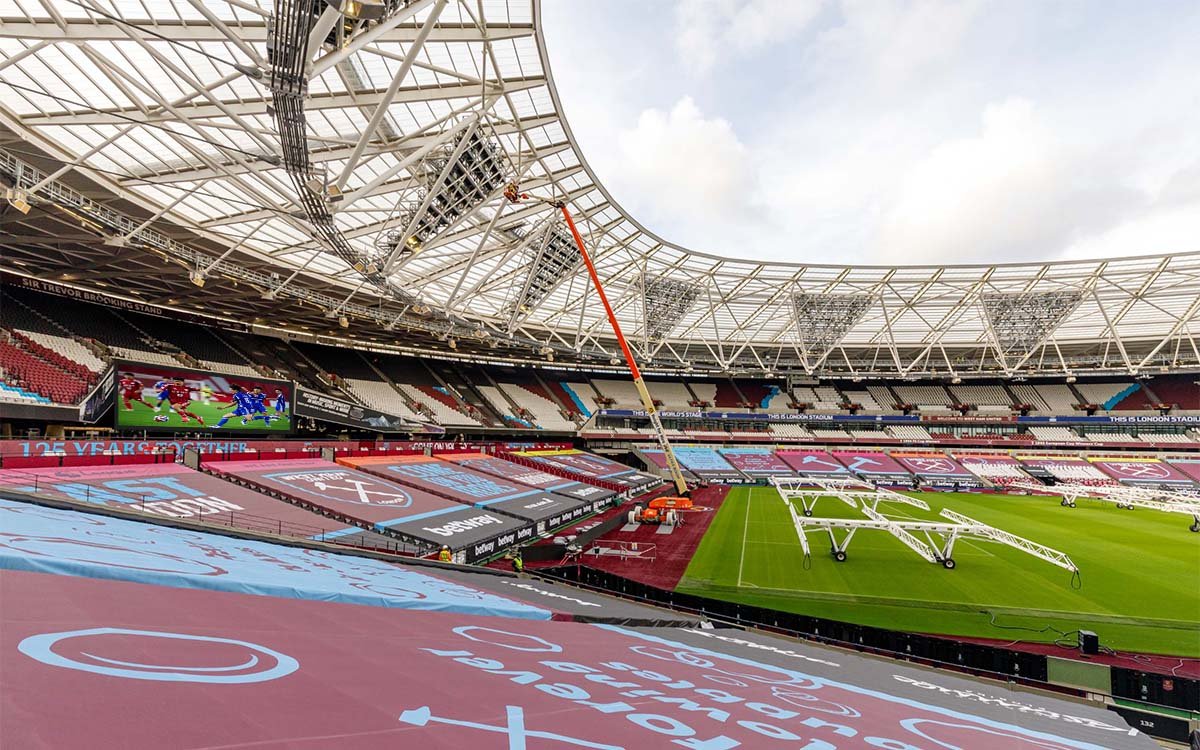
Figure 3: Stadium LED displays installation — structural mounting and modular assembly process
Engineering for Impact: What Makes a Stadium LED Display Different
Stadium LED displays face conditions that would destroy any commercial screen within weeks. The engineering solutions are specific and non-negotiable.
Impact Protection: Perimeter boards sit meters from professional athletes running at full speed. A misdirected ball or sliding tackle can generate hundreds of newtons of force. Professional stadium LED displays use soft rubber masks over each module, anti-collision foam backing, and flexible cabinet designs that absorb impact without transferring force to the LED components. The FIFA Quality Programme for stadium equipment includes specific impact-resistance testing that certified displays must pass.
Weather Hardening: Outdoor stadium LED displays operate in conditions ranging from -40°C in Nordic winter stadiums to +70°C in Middle Eastern summer venues. IP65 front and IP54 rear protection ratings are standard. Sealed cabinets prevent moisture ingress, while integrated cooling systems with temperature sensors maintain optimal operating conditions. UV-resistant coatings prevent yellowing and degradation of the LED encapsulation over years of sun exposure.
Brightness Management: A stadium LED display must remain legible in direct midday sunlight — requiring 5,000 to 7,500 nits for outdoor installations. But that same display, left at full brightness during a night match, would blind spectators and waste enormous amounts of power. Modern systems include ambient light sensors that automatically adjust brightness in real time, dimming to 10–20% of peak output after sunset while maintaining optimal contrast ratios.
Broadcast Compatibility: Television cameras capture LED screens at 50 or 60 frames per second. If the display refresh rate is too low, viewers at home see flickering, scan lines, or color banding. Professional stadium LED displays operate at 3,840 Hz minimum, with top-tier installations reaching 7,680 Hz — well above the threshold where camera sensors capture clean, stable images. This matters enormously for sponsor visibility: a brand paying £100,000 per match for perimeter advertising expects their logo to appear crisp on broadcast, not distorted by technical artifacts.
Stadium LED Displays Installation: What Venue Operators Need to Know
The installation of a stadium LED display is a structural engineering project, not merely an AV deployment. Several factors determine project complexity and timeline.
Structural Assessment: Before any LED modules arrive, a structural engineer must evaluate the load-bearing capacity of the installation surface. Center-hung scoreboards can weigh 20+ tonnes — the supporting structure must handle this static load plus wind loads and dynamic forces from lift mechanisms. Perimeter boards require foundation pads capable of withstanding ground vibration from crowd movement and the physical impact of athletes.
Power Infrastructure: A full stadium LED display system — center-hung, perimeter, and ribbon — can draw 200–500 kW during peak operation. Most older stadiums lack the electrical infrastructure to support this load. Power upgrades, including dedicated transformers and backup generators, often represent 15–25% of total project cost. Planning for 20% power headroom above peak calculated load is standard practice.
Signal Distribution: Modern stadium LED control systems use fiber optic or CAT6 cabling for signal transmission over long distances without degradation. The control room — typically located in the stadium press box or a dedicated AV suite — must maintain line-of-sight or cabled connectivity to all display zones. Redundant signal paths are essential: if the primary cable fails during a live match, a backup path must activate automatically within seconds.
Calibration and Commissioning: After physical installation, every LED module must be calibrated for color temperature, brightness, and gamma uniformity. A 95% brightness uniformity threshold is the industry standard for professional installations. This process can take 2–5 days depending on system size. Post-calibration, the entire system undergoes burn-in testing — continuous operation for 72+ hours to identify any early-failure components before handover.
Our stadium LED display systems are engineered to FIFA and UEFA standards, with impact-resistant perimeter boards, broadcast-grade center-hung scoreboards, and seamless ribbon installations. Request a technical specification for your venue.
Request Stadium Display Quote →Stadium LED Display Content Strategy: Beyond the Score
The hardware is only half the equation. A stadium LED display without a content strategy is like a Ferrari without a driver — impressive to look at, but going nowhere. Venues that maximize LED investment treat content as a dedicated discipline.
Match-Day Content Flow: Professional stadiums operate with pre-planned content schedules that sync with match events. Pre-match: team lineups, historical head-to-head stats, player profiles. Kick-off: live score, match clock, possession statistics. Halftime: sponsor messages, concession promotions, entertainment content. Post-match: final score, player ratings, upcoming fixtures. The content management system must switch between these modes instantly, triggered by real-time data feeds from the match officials and timing systems.
Sponsor Integration: The most valuable LED real estate is perimeter advertising during broadcast — when cameras pan across the pitch, sponsor logos appear in millions of living rooms. Smart venues use dynamic content that responds to match events: a goal triggers a sponsor celebration animation, a red card displays a “fair play” message from a brand partner. This contextual relevance increases sponsor recall rates by 40% compared to static logo rotation.
Fan Engagement: Modern stadium LED displays support interactive content — live polls, social media walls, crowd noise meters, and kiss-cam sequences. The ribbon screen can display fantasy football scores updated in real time, keeping fans engaged even when the on-pitch action pauses. These features don’t just entertain; they increase concession sales by keeping spectators in their seats during lulls in play.
Case Study: The Air Albania Stadium LED Scoreboard
In Tirana, the Air Albania Stadium installed a center-hung LED scoreboard measuring 12.48 × 7.68 meters — nearly 96 square meters of display area. Built with outdoor SMD LED technology at P10 pixel pitch, the system delivers 5,000 nits brightness for direct sunlight visibility. The resolution of 1248 × 768 pixels provides sharp text and video at viewing distances from 30 to 120 meters.
The installation transformed the stadium from a functional sports venue into a landmark. On match days, the scoreboard displays live action, instant replays, and sponsor content. Between matches, it serves as a community billboard for city events and public announcements. The venue now hosts not only football matches but concerts, political rallies, and cultural festivals — with the LED display adapting content for each use case.
This versatility is the hidden value of stadium LED investment. A venue that buys LED for football discovers it can monetize the same hardware for concerts, corporate events, and outdoor cinema screenings. The depreciation schedule changes entirely when the asset generates revenue 200+ days per year instead of 40.
Stadium LED Display FAQ
Conclusion: The Stadium LED Display Is Non-Negotiable
The transformation of sports venues through stadium LED display technology is not a trend — it’s a structural shift in how stadiums generate revenue and engage audiences. Static advertising boards, manual scoreboards, and projector-based replay systems belong to a previous era. Modern spectators, raised on HD broadcasts and smartphone screens, expect the in-stadium experience to match or exceed what they see at home.
For venue operators, the business case is equally compelling. A stadium LED display system doesn’t just improve the fan experience — it fundamentally restructures the venue’s revenue model. Multiple sponsor slots per match, dynamic pricing for premium ad positions, and year-round content monetization turn a cost center into a profit engine. The clubs and venues that invested early are now pulling ahead; those that delay risk obsolescence.
At GOB LED Display, we engineer GOB-encapsulated stadium LED displays that combine the durability of Glue on Board technology with the brightness, refresh rates, and impact resistance that professional sports demand. Our systems are deployed in venues across Europe, Asia, and the Middle East — from community sports complexes to international competition stadiums. Every installation is calibrated to the specific structural, environmental, and content requirements of the venue.
The next decade of sports venue design will be defined by LED. The only question is whether your stadium leads that transformation or follows it.
Detailed technical datasheets, structural requirements, and ROI projections for your specific venue. Our stadium specialists are ready to engineer your solution.
Contact Stadium Engineers →