As a professional COB LED display manufacturer, we sincerely suggest you not to choose the wrong LED display technology can cost you thousands in maintenance, shorten product lifespan, and compromise visual quality. Whether you are building a command center, stadium billboard, or retail installation, understanding the difference between GOB LED Technology, COB LED Technology, and SMD LED Technology encapsulation is the first step toward a successful project.
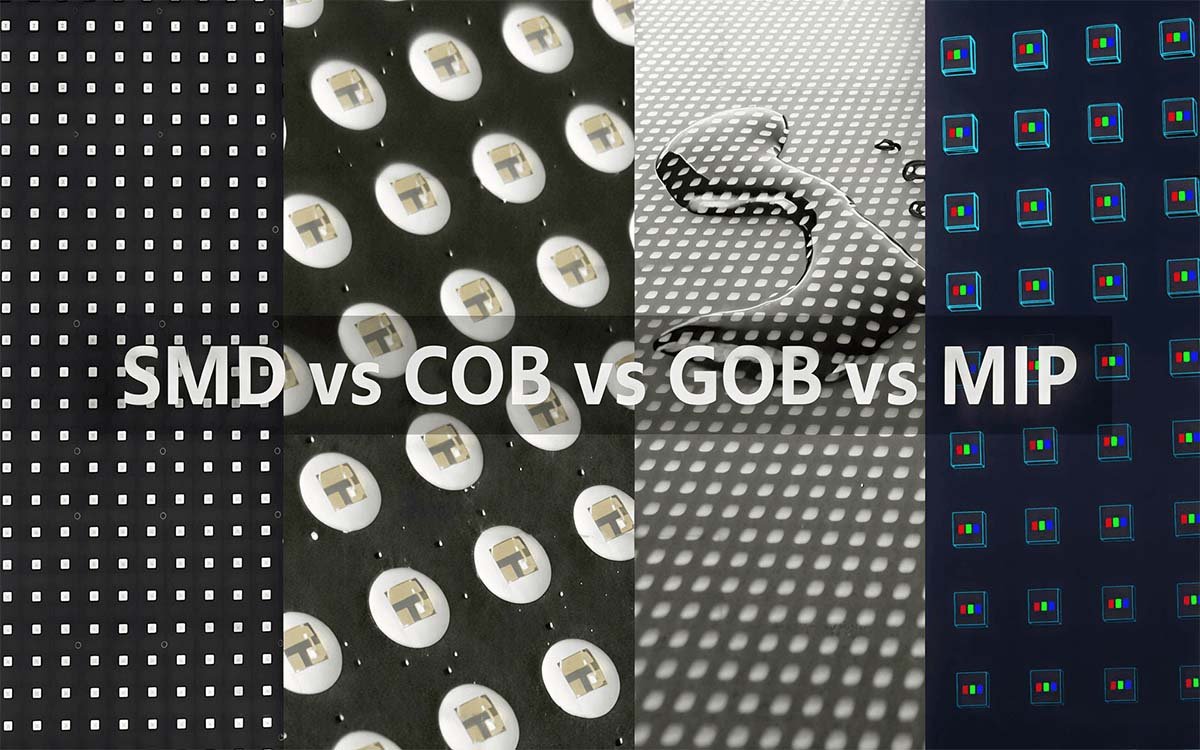
Figure 1: Side-by-side comparison — SMD (exposed beads), COB (uniform resin), and GOB (resin-coated SMD)
1. What Is SMD LED Display?
Surface Mount Device (SMD) has been the dominant LED packaging technology for over a decade. In an SMD module, red, green, and blue LED chips are individually mounted onto a plastic package with metal leads, then soldered onto the PCB.
How SMD LED Display Works
Each pixel consists of three separate diodes (R, G, B) encapsulated in a single lamp bead. These beads are arranged in a matrix on the module surface. Common configurations include 3-in-1 SMD (most common) and separate SMD for ultra-large outdoor screens.
Strengths of SMD LED Display
- Mature supply chain: Widely available, cost-effective, and easy to source.
- High brightness: Excellent for outdoor applications where sunlight readability is critical.
- Easy repair: Individual lamp beads can be replaced with standard soldering tools.
- Wide pixel pitch range: From P20 down to P1.5, covering almost every application.
Weaknesses of SMD LED Display
- Vulnerable to physical damage: The exposed lamp beads can be knocked off during transportation, installation, or cleaning.
- Limited moisture resistance: Without additional coating, SMD modules are prone to oxidation and short circuits in humid environments.
- Visible pixel structure: At close viewing distances, the “grainy” appearance of individual beads becomes noticeable, especially on pitches above P2.5.
Best for: Large outdoor billboards, rental stages, and budget-conscious projects where viewing distance exceeds 5 meters.
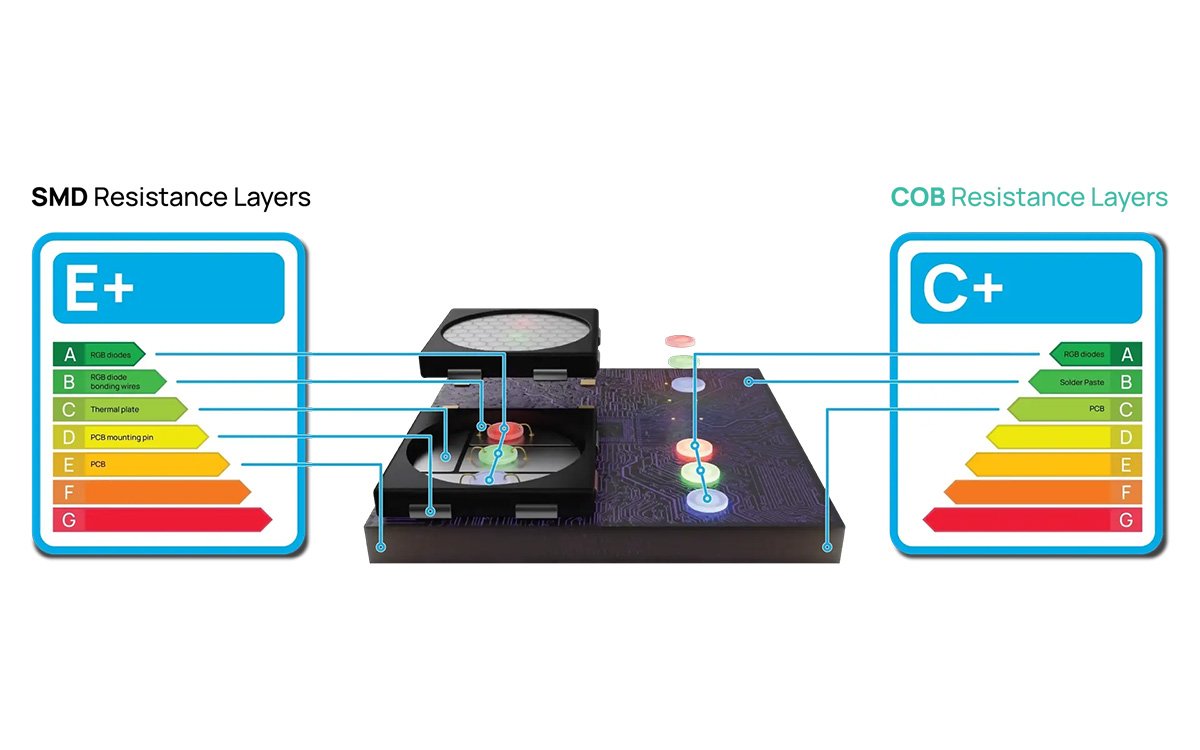
Figure 2: COB technology — bare LED chips bonded directly to PCB with uniform resin coating
2. What Is COB LED Display?
Chip on Board (COB) represents a significant leap in LED packaging. Instead of mounting pre-packaged lamp beads, bare LED chips are directly bonded to the PCB substrate and then covered with a uniform layer of encapsulant resin.
How COB LED Display Works
The three LED chips (R, G, B) are die-bonded directly onto the circuit board. A phosphor layer and epoxy resin are then dispensed over the entire surface, creating a smooth, continuous face with no visible individual beads.
Strengths of COB LED Display
- Superior protection: The resin layer shields chips from moisture, dust, and physical impact.
- Excellent heat dissipation: Direct chip-to-board contact reduces thermal resistance, improving longevity.
- Seamless surface: No visible pixel grid, delivering a print-like visual experience even at close range.
- Higher contrast: The matte resin surface absorbs ambient light rather than reflecting it.
Weaknesses of COB LED Display
- Difficult repair: If a chip fails, the entire module often needs replacement rather than spot repair.
- Higher cost: The manufacturing process requires precision die-bonding and dispensing equipment.
- Color consistency challenges: Batch-to-batch resin mixing can introduce slight color variation across modules.
- Yield rate: Any defect in the bonding process can scrap the entire module, driving up costs.
Best for: High-end indoor control rooms, broadcast studios, and corporate boardrooms where image quality is paramount and budget is flexible.
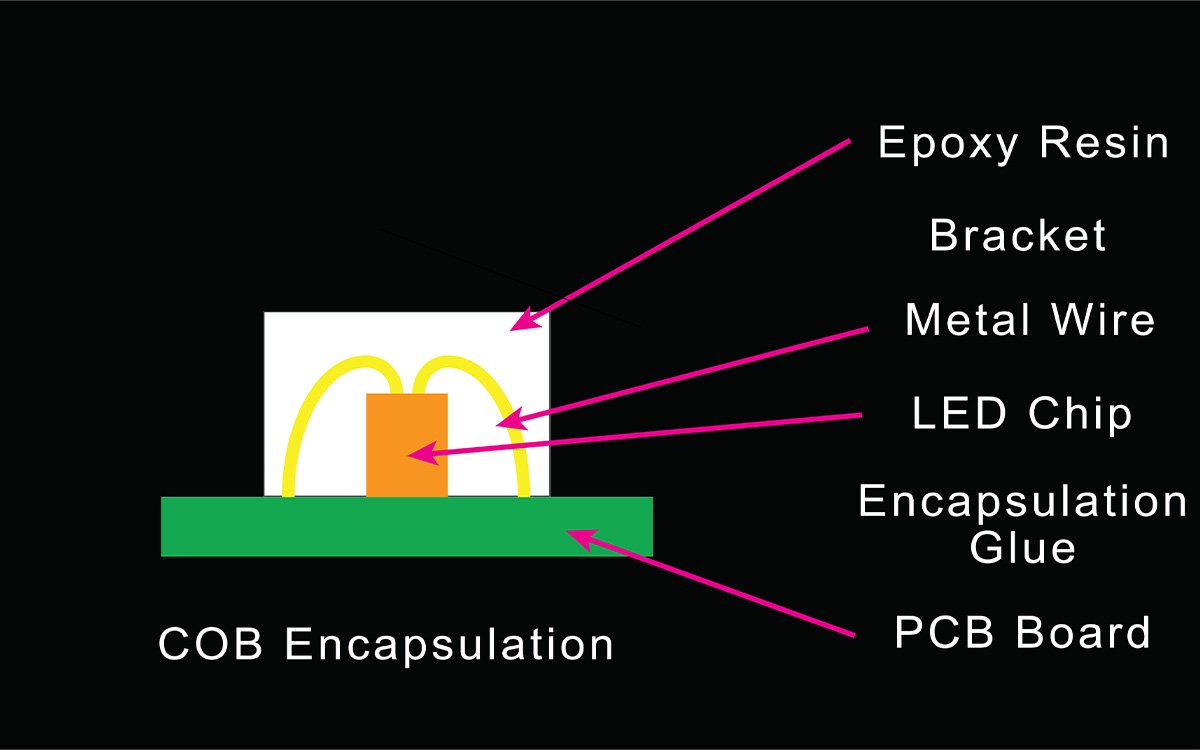
Figure 3: GOB technology — transparent resin shell protects SMD beads while maintaining repairability
3. What Is GOB LED Display?
Glue on Board (GOB) is the newest encapsulation technology that bridges the gap between SMD and COB. It takes a standard SMD module and applies a transparent epoxy resin layer over the entire surface, protecting the lamp beads while preserving the modularity and repairability of SMD.
How GOB LED Display Works
The process involves three precision steps: (1) plasma cleaning of the SMD module surface; (2) vacuum dispensing of optical-grade epoxy resin; (3) UV or thermal curing to create a hard, transparent protective shell. The resin fills the gaps between beads without covering the light-emitting surface, preserving brightness and color accuracy.
Strengths of GOB LED Display
- Anti-collision protection: The resin shell prevents lamp beads from falling off during shipping, installation, and routine cleaning.
- Waterproof & moisture-proof: IP54 front protection makes GOB suitable for humid environments like swimming pools, aquariums, and coastal installations.
- Easy repair: Unlike COB, failed beads can still be individually replaced using standard rework stations.
- Cost efficiency: Leverages existing SMD production lines, keeping prices significantly lower than COB.
- Wide pitch compatibility: GOB coating can be applied to pitches from P0.7 to P3.9, covering fine-pitch indoor to standard outdoor.
- 10,000:1 contrast ratio: The matte resin surface reduces glare while maintaining deep blacks.
Weaknesses of GOB LED Display
- Slightly reduced brightness: The resin layer absorbs ~3-5% of light output compared to bare SMD.
- Weight increase: The coating adds marginal weight per module, though negligible for fixed installations.
- Process sensitivity: Poor resin formulation or uneven dispensing can cause yellowing over time — supplier quality matters.
Best for: All-in-one LED displays, stadium billboards, high-traffic retail, and any project where durability and image quality must coexist.
4. Head-to-Head Comparison
| Feature | SMD | COB | GOB |
|---|---|---|---|
| Encapsulation | Plastic lamp bead | Direct resin over chips | Resin layer over SMD beads |
| Physical Protection | Low — exposed beads | High — fully sealed | High — hard resin shell |
| Repairability | Easy — single bead swap | Difficult — module replace | Easy — single bead swap |
| Moisture Resistance | IP20–IP30 | IP54+ | IP54+ |
| Viewing Distance | Best >5m | Best 1–5m | Best 1–10m |
| Contrast Ratio | 3,000:1 – 5,000:1 | 8,000:1 – 10,000:1 | 8,000:1 – 10,000:1 |
| Gray Scale | 14 – 16 bit | 16 – 18 bit | 16 – 19 bit |
| Cost (per sqm) | $ | $$$ | $$ |
| Typical Lifespan | 50,000 hrs | 80,000 hrs | 80,000+ hrs |
| Ideal Application | Outdoor billboard | Control room / Studio | Stadium / Retail / Events |
5. Which Technology Is Right for Your Project?
Choose SMD If…
- Your display will be mounted outdoors with a viewing distance of 10+ meters.
- Budget is the primary constraint and maintenance access is easy.
- You need maximum brightness for direct sunlight readability (P10–P20).
Choose COB If…
- You operate a 24/7 control room or broadcast studio requiring zero downtime.
- Viewing distance is under 2 meters and pixel pitch is below P1.2.
- Budget allows for premium hardware and module-level replacement contracts.
Choose GOB If…
- You need a portable LED poster or mobile display that travels between venues.
- The screen is in a public area where physical contact is likely (museums, malls, transit hubs).
- You want COB-level durability without COB-level prices.
- Your project requires fine pitch (P0.7–P2.5) with long-term reliability.
6. Why GOB Is the Future of Fine-Pitch LED Displays
The LED industry is converging on a simple truth: durability and image quality are no longer mutually exclusive. GOB technology solves the fundamental trade-off that forced buyers to choose between SMD’s affordability and COB’s protection.
At GOB LED Display Manufacturer, we have deployed over 500+ GOB units across stadiums, corporate headquarters, and retail chains. Field data shows a failure rate below 0.5% after 24 months of continuous operation — compared to 3–5% for standard SMD modules in similar environments.
Three trends are accelerating GOB adoption in 2026:
- Indoor fine-pitch demand is exploding: P1.2 and P0.7 displays are now standard for executive boardrooms, not just control rooms. GOB makes these fragile pitches durable enough for commercial use.
- Rental market requirements have tightened: Event companies can no longer afford downtime from damaged modules. GOB’s anti-collision property reduces transport damage by over 90%.
- Total Cost of Ownership (TCO) awareness: Buyers are looking beyond upfront price. GOB’s lower maintenance frequency and longer lifespan deliver 20–30% TCO savings over 5 years compared to SMD.
7. Key Takeaways
- SMD remains the budget king for large outdoor pitches, but its fragility limits indoor and mobile applications.
- COB delivers the ultimate image quality for mission-critical control rooms, yet its repair complexity and cost restrict mainstream adoption.
- GOB offers the optimal balance: COB-grade protection, SMD-grade repairability, and a price point accessible to mid-market buyers.
If your project involves stadium LED displays, transparent LED screens, or all-in-one mobile units, GOB encapsulation should be your default specification. The technology has matured beyond early-adopter status and is now the industry standard for any application where reliability matters.
Get a Custom GOB LED Display Quote
Tell us about your project requirements, installation environment, and timeline. Our engineers will recommend the optimal pixel pitch, cabinet size, and control system configuration — delivered within 24 hours.
Request a QuoteFrequently Asked Questions
Can GOB LED displays be used outdoors?
Yes, GOB modules with IP65-rated cabinets are suitable for permanent outdoor installations. The resin encapsulation provides excellent moisture and dust protection. However, for giant billboards (P10+), traditional SMD may still be more cost-effective.
Does GOB coating affect LED brightness?
The optical-grade resin used in GOB modules absorbs approximately 3–5% of light output. In practice, this is compensated by using slightly higher-brightness LED chips during manufacturing. The final perceived brightness is virtually identical to bare SMD.
How do I repair a dead pixel on a GOB module?
Unlike COB, GOB modules allow individual bead replacement. Technicians use a hot-air rework station to remove the failed bead, clean the pad, and solder a new bead in place. The resin around the repair area can be locally removed and re-applied.
What is the minimum pixel pitch available for GOB?
Current manufacturing capabilities support GOB coating down to P0.7mm. At this pitch, the display delivers true 4K resolution at screen sizes under 150 inches diagonal, making it ideal for premium boardrooms and virtual production studios.
Is GOB compatible with existing SMD cabinets and control systems?
Absolutely. GOB modules use the same PCB footprint, driver ICs, and data protocols as their SMD counterparts. You can upgrade from SMD to GOB without changing cabinets, power supplies, or controller hardware.
Related Articles:
→ How to Calculate LED Display Size for Your Venue
→ LED Display Installation Guide: Step-by-Step for Beginners
→ Transparent LED Display vs Regular LED: Pros & Cons